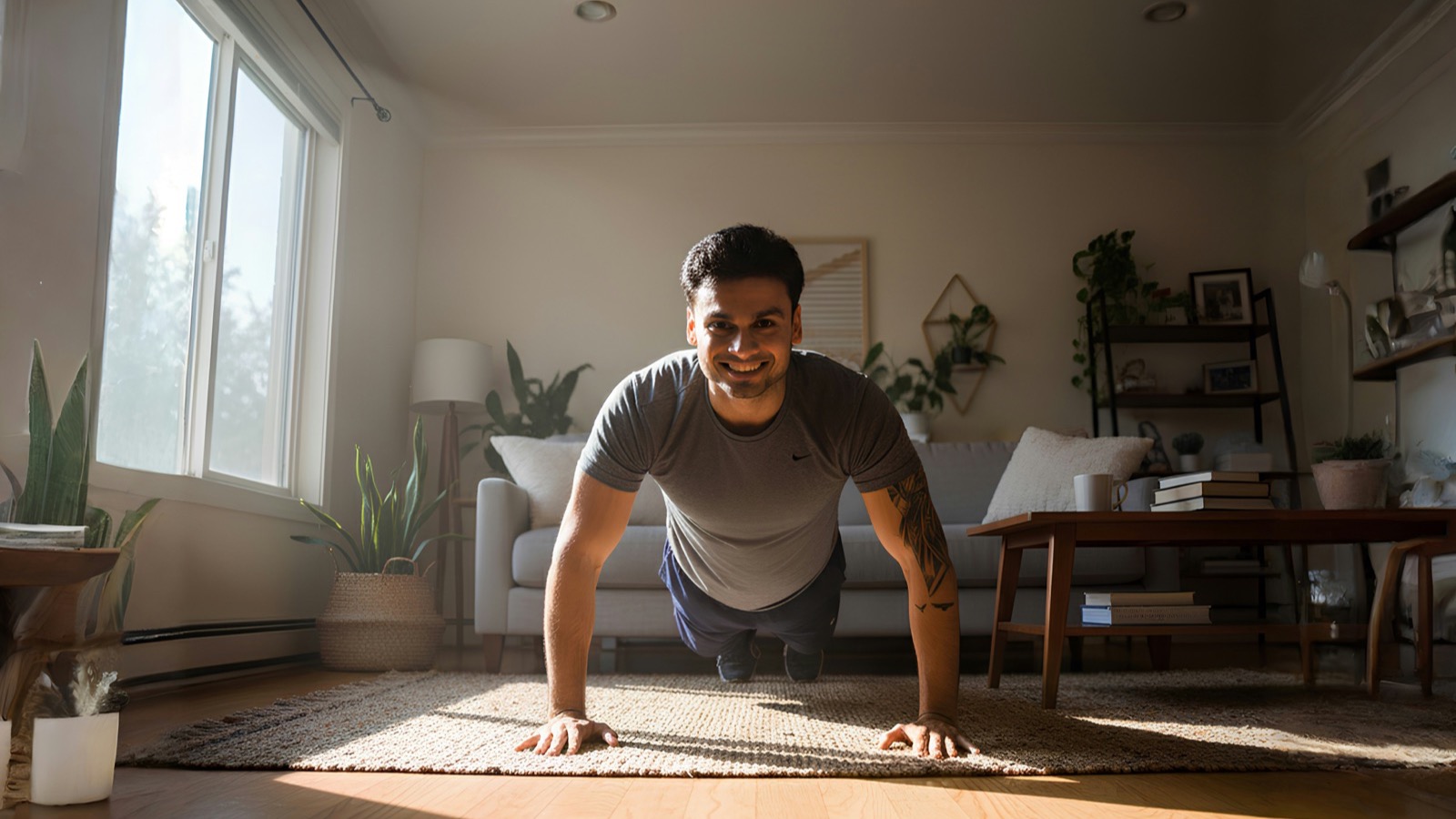
Exercise Snacking: Why 5-Minute Movement Breaks Add Up to Real Fitness
Not everyone has 60 minutes to block off for a workout. And for a lot of people, the all-or-nothing mindset — "if I can't do a full session, why bother?" — is the biggest barrier to staying active. But a growing body of research says that's exactly backward.
Short bursts of movement spread throughout the day — what researchers call "exercise snacks" — can deliver real, measurable health benefits. And the best part? They fit into the cracks of your day without requiring a gym, a shower, or a change of clothes.
YouTube: Related video
What exactly is an exercise snack?
The term was popularized by exercise physiologist Dr. Martin Gibala at McMaster University, and later championed by figures like Dr. Andy Galpin and Dr. Andrew Huberman. The idea is simple:
An exercise snack is a short, intentional bout of physical activity — anywhere from 20 seconds to 10 minutes — done one or more times throughout the day.
Think of it like this: instead of one big meal of movement, you're grazing. A set of bodyweight squats while your coffee brews. A brisk one-minute walk up and down the stairs after a meeting. Ten air squats and five push-ups between email replies.
The key word is intentional. This isn't just fidgeting or walking to the printer. You're deliberately raising your heart rate and engaging your muscles for a brief, concentrated period.
The science: it actually works
The research on exercise snacking is surprisingly strong:
Cardiovascular fitness improves. A 2019 study in Applied Physiology, Nutrition, and Metabolism found that three 20-second "all-out" stair climbs, done three times per day with 1–4 hours of rest between, improved VO₂ max by 5% in just six weeks. That's comparable to what some people get from traditional moderate-intensity training.
Blood sugar control gets better. Multiple studies show that breaking up prolonged sitting with short activity breaks — even just 2 minutes of walking every 30 minutes — significantly reduces post-meal blood sugar spikes. For anyone concerned about metabolic health, this is incredibly useful.
It lowers cardiovascular strain from sitting. Prolonged sitting impairs blood flow and increases arterial stiffness. Short movement breaks restore endothelial function — essentially, the flexibility of your blood vessels. Even a one-minute walk can make a difference.
It improves adherence. This might be the biggest benefit. People stick with exercise snacking because the barrier is so low. You don't need to change clothes, drive anywhere, or carve out a full hour. That lower friction means you actually do it — consistently.
Why it works with your wearable
If you wear an Apple Watch or Garmin, you can actually see the effect of exercise snacks on your daily metrics:
- Active calories accumulate through the day from small bursts
- Stand hours on Apple Watch get a boost
- Heart rate spikes followed by recovery improve your overall cardiovascular load pattern
- Daily strain or exertion scores rise without a single formal workout
With an app like Century AI, these small efforts also feed into your recovery score — because even low-intensity movement signals to your body that you're active, which can actually improve autonomic balance (higher HRV) compared to a completely sedentary day.
What a day of exercise snacking looks like
You don't need a structured plan to start. But here's a realistic example of what exercise snacking looks like in a normal day:
| Time | Exercise Snack | Duration |
|---|---|---|
| 7:30 AM | Bodyweight squats while coffee brews | 2 min |
| 10:00 AM | Walk up and down stairs briskly | 3 min |
| 12:30 PM | Post-lunch walk around the block | 5 min |
| 3:00 PM | Push-ups + lunges at your desk | 2 min |
| 5:30 PM | Stretch and mobility flow | 3 min |
| 8:00 PM | Post-dinner walk | 10 min |
That's roughly 25 minutes of intentional movement — without a single "workout." Add a couple more 30-second stair sprints and you've hit real training stimulus.
The trick is making it automatic. Pair each snack with an existing habit: coffee brewing, a meeting ending, lunch wrapping up, the end of an episode.
Exercise snack ideas that require zero equipment
- Stair sprints: Walk or jog up a flight of stairs, walk down, repeat 2–3 times
- Bodyweight squat holds: 30 seconds of holding the bottom position
- Desk push-ups: Against a wall, desk, or the floor
- Marching in place: High knees for 60 seconds — harder than it sounds
- Lunges across the room: 10 lunges each direction
- Jumping jacks: 60 seconds, as fast as you can maintain
- Wall sit: Hold for 30–60 seconds
- Calf raises: While brushing your teeth or waiting for the kettle
Does it replace traditional workouts?
Exercise snacking isn't meant to fully replace structured training — especially if you have specific goals like building significant muscle, running a race, or improving in a sport. Long-form training still has unique benefits: sustained cardiovascular stress, deep skill practice, and the mental resilience that comes from sustained effort.
But for general health, metabolic fitness, and breaking the harm of prolonged sitting, exercise snacks are criminally underrated. And they're infinitely better than doing nothing because you "don't have time."
If your current routine is mostly sedentary with occasional gym visits, adding 3–5 exercise snacks per day is likely the single biggest upgrade you can make to your health. Your wearable will show the difference within a week.
Quick summary
- Exercise snacks are short, intentional bursts of activity (20 seconds to 10 minutes) spread throughout the day
- Research shows they improve VO₂ max, blood sugar control, and cardiovascular function
- They reduce the harm of prolonged sitting — even 2-minute breaks help
- The low barrier makes them far easier to stick with than traditional workouts
- Your Apple Watch or Garmin will reflect the accumulated movement in your daily metrics
- Pair each snack with an existing habit to make it automatic
- They complement — not replace — structured training for specific fitness goals
Century AI helps you understand your body with a daily health score, recovery score, and sleep insights — using the watch you already wear.